

The #1 Reason ESL Researchers' Papers Get Rejected (After Editing 200+ Manuscripts)
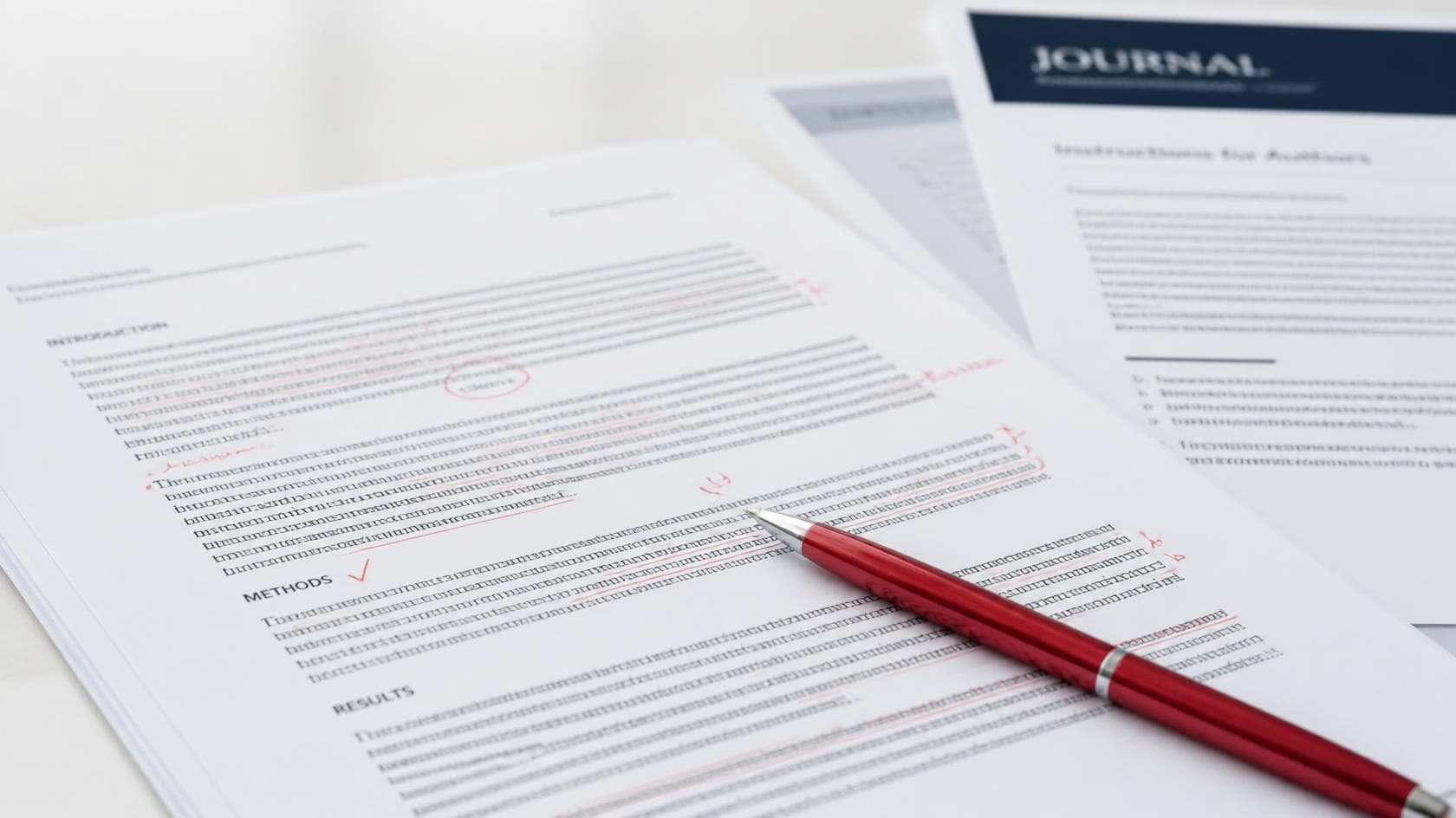
As an editor of over 200 papers that have contained more than one million words of text written by ESL scholars, I have come across a trend which seems to be causing many rejections from academic journals. The problem rarely lies in the quality of the research carried out. The main thing that determines the fate of the paper is whether it is clear enough, not whether it is competent. Where the reviewer has to struggle to understand what the author says or means, he or she might cast doubt on the research's quality.
It Is Not the Research; It Is How Clear It Is Written
The process has taken you months, or even years, of formulating your hypothesis, collecting data, conducting analyses, and writing the paper. Then a reviewer may say that it is “unclear,” “difficult to understand,” or “needs major editing for language.”
It can seem very personal, like the reviewer rejects you and not just your work. For non-native speakers, the feeling will be even worse since language skills and research capabilities are separate from each other. A good research question, a proper methodology, interesting findings, and valuable contribution may be overshadowed by difficult language.
Reviewers read many papers, and they need to concentrate on the research itself, and not try to untangle sentences. Difficult language creates additional workload. One long sentence with several clauses may be grammatically correct but not explain the connection between variables.
Friction between the two in the delivery is important.
When the process is hard to understand, it means that the reviewer can question the control of procedures. When the discussion incorporates the main finding in long paragraphs, the significance of the contribution is less. When terminology changes from one section to another, the clarity of the paper may be compromised.
Therefore, good academic editing involves more than just grammar. The aim is to make the quality of research evident right away.
The Pattern I See Across 200+ Manuscripts
In over two hundred documents I have edited, there is one commonality: many sentences and paragraphs contain too much information.
This tendency comes about when academics attempt to achieve preciseness by incorporating each qualification, condition, explanation, and citation into one sentence. What results is typically a complex sentence that is technically valid but difficult to understand.
For instance, a sentence on methodology can be written to indicate the subjects, recruitment process, inclusion requirements, research location, period of data collection, and analysis approach at once.
None of the individual points presents any difficulties; rather, the challenge is that the reader has to remember several points at once.
I come across a closely related set of problems quite often:
- Long sentences which include several conflicting points. One sentence tries to provide background information, describe the relation between something, introduce an exception, and formulate a conclusion.
- Wrong modifiers. The modifier which is supposed to describe one point is found close to another point.
- Unnecessary changes of tenses in the methodology sections. One does not know whether the researcher wants to describe the procedures, discuss the results of the experiment or the regularities of the process.
- Lack of coherence between sentences. Even though every separate sentence is alright, the whole paragraph fails to demonstrate how one idea leads to another.
- Dense discussion sections which try to squeeze interpretations, limitations, comparison to previous work and implications in one or two sentences.
However, none of those problems implies the weakness of the research by default.
On the contrary, those problems force the reader to make his own conclusions.
It is important to distinguish those problems because proper academic editing should not change any scientific facts or make the paper sound “native”. It should only remove linguistic obstacles which do not let the reviewer see the conclusion that is already there.
Implications for Submission
When considering the submission of a manuscript to a journal, it is not enough to determine the correctness of language; it is necessary to ask whether a busy reviewer will understand the core argument in the first read-through. The four self-evaluation criteria that can help include:
- Read out loud the longest sentences. If there is a sense of breathlessness or loss of focus on the subject and predicate, try to break down the sentence.
- Make sure that each paragraph is devoted to one dominant idea. When the paragraph jumps from methods to results to discussion, separate the functions of different paragraphs.
- Determine the consistency of tenses in the description of methodology. Use past tenses for the procedures done and present tenses for the facts or results proved by the research.
- Consider the claims independently. It should be possible to find the research question, core finding, and contribution separately.
Do not procrastinate to the last day before submitting.
Finally, proofreading language may well be one of the most beneficial actions in the publication process because it offers a chance to avoid misunderstanding that might arise in the course of reviewing the manuscript.
The goal is not to make the manuscript overly complicated or refined, but to make the author's logic clear and transparent.
This is the point that distinguishes correction of English from academic editing.
Language errors might become a reason for a journal rejection, but it is not inevitable.
For ESL scholars who have written their manuscript and are going to submit it, there is a free editing sample of 500 words to show what kind of help you will receive from me. Contact / Services Page